
How AI Agents Preserve Incident Knowledge for Engineering Teams
Incident knowledge disappears when it stays inside threads, tickets, and memory. AI agents can capture the investigation path while engineers work.

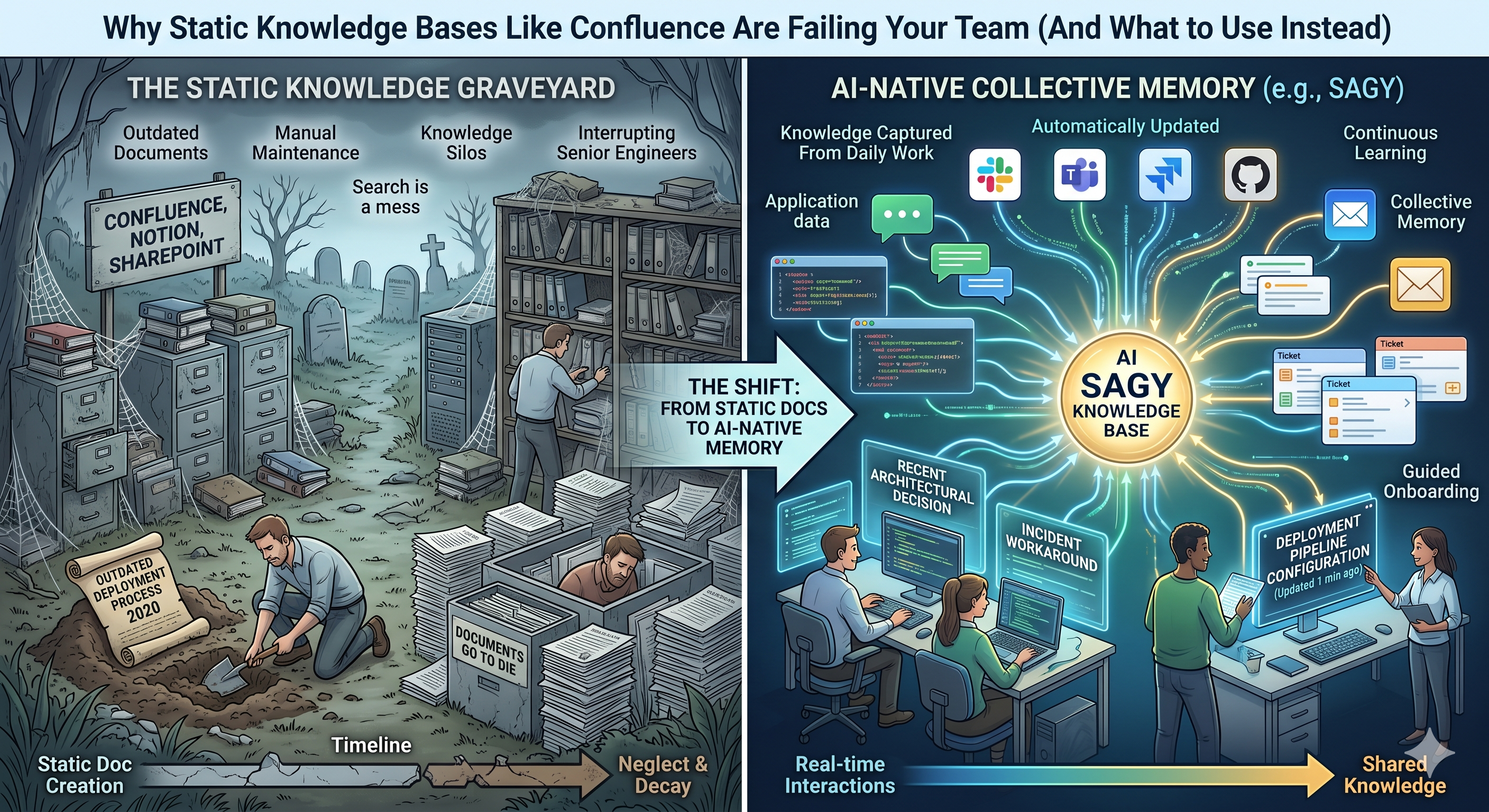
Every incident creates knowledge. Engineers learn which symptoms mattered, which theories failed, which commands helped, which logs were useful, and which fix finally worked.
Most of that knowledge disappears. It stays in Slack, Jira comments, local notes, or one engineer's memory. The next incident starts from scratch.
Documentation After The Fact Does Not Scale
Teams often try to solve this with a wiki. The intention is good, but the timing is wrong. After an incident is resolved, everyone wants to move on. The most important details are easiest to forget exactly when documentation is supposed to happen.
That is why static knowledge bases drift away from real engineering work.
Capture The Path During The Investigation
An AI agent can preserve incident knowledge while the work happens:
- the original symptoms and affected systems
- the tickets, commits, logs, and docs consulted
- hypotheses that were tested and rejected
- commands, reproduction steps, and validation checks
- the final fix and source-backed explanation
This is the difference between passive documentation and engineering memory.
Reuse Memory In The Next Incident
When a similar issue appears later, Sagy can surface the prior investigation instead of sending engineers back through months of messages and tickets.
The agent does not replace engineering judgment. It gives the team a better starting point: source-backed memory from work the team already validated.
The Compounding Effect
The first investigation saves time. The tenth investigation changes how the team works. Sagy becomes a layer that remembers what your engineers learned and applies it to the next customer bug, regression, outage, or device failure.
That compounding memory is why incident investigation is the right foundation for Sagy's SEO and product story.